Phototherapy for atopic dermatitis
Narrowband phototherapy (Excimer 308 nm / Narrowband UVB 311 nm) for atopic dermatitis and eczema on the face, hands, body and scalp. Course selected individually.
Atopic dermatitis is a chronic inflammatory skin disease with a damaged barrier and itch as its defining symptom. It runs in waves: stretches of relative calm broken by flares. Phototherapy works with that rhythm rather than against it — it does not end atopic dermatitis once and for all, it brings the skin out of a flare and stretches the gap before the next one. Basic care stays in place throughout: emollients and whatever topical therapy your doctor has prescribed. Phototherapy adds to that, it does not replace it.
The mechanism of narrowband UVB is local and well studied: the light penetrates a short distance into the dermis, suppresses the inflammatory T-cells driving the lesion, reduces Staphylococcus aureus colonisation of the skin and raises the itch threshold. In practice that means the first thing patients notice is not that the patches have gone but that the itching has stopped and they can sleep — the thickening, scaling and redness clear after that.
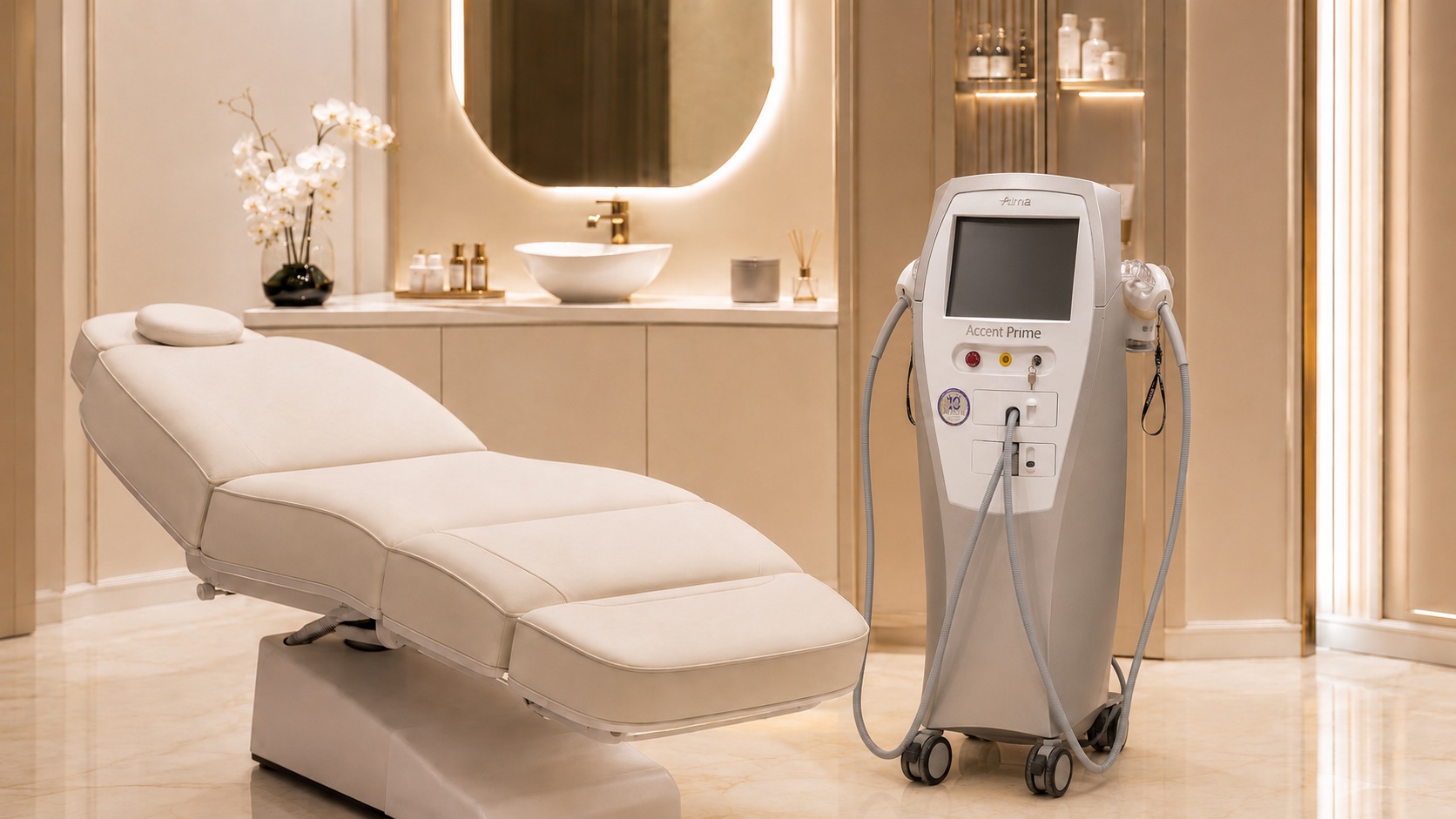
At Paramed phototherapy runs on the Harmony XL Pro (Alma) platform in two modes, and the choice between them comes down to area. Narrowband UVB 311 nm is the standard for widespread involvement, when large parts of the body, arms or legs are affected. Excimer 308 nm is a targeted laser: it delivers a higher dose to a limited patch and barely touches the surrounding healthy skin. That is exactly why it is the one used on the face, neck and scalp, and on stubborn localised patches that have not responded to the broad mode.
A typical course is 2–3 sessions per week, with a session on a limited area taking about 20–30 minutes. There is no point judging the result before 8–12 sessions — the effect is cumulative. Pricing is per pulse rather than per whole session: UVB 311 from 40 ₼ per 10 pulses, Excimer 308 from 50 ₼ per 10 pulses, with the current tiers listed in the price list. Phototherapy is not for everyone: there are contraindications around photosensitising medication, photodermatoses and a history of skin cancer, so a course is only prescribed after an examination. Results are individual.
Related services
Frequently asked questions
Will phototherapy cure atopic dermatitis completely?
No, and promising that would be dishonest. Atopic dermatitis is a chronic condition you manage rather than close out with a single course. Phototherapy's job is to clear the current flare and lengthen the remission; basic care and your prescribed topical therapy continue alongside it.
How many sessions are needed and when is the result visible?
A course is usually built as 2–3 sessions a week, with the total set by the doctor based on the area involved and how your skin responds. Itch settles first, often within the first one to two weeks. The lesions themselves are worth reassessing after 8–12 sessions — the effect is cumulative.
What is the difference between Excimer 308 nm and Narrowband UVB 311 nm, and which will I get?
The difference is area and dose. UVB 311 is the mode for widespread lesions over large areas. Excimer 308 is a targeted laser: a higher dose to a limited patch, minimal exposure for the surrounding healthy skin. That is why the face, neck, scalp and stubborn localised patches are usually treated with Excimer. The doctor selects the mode at the consultation, and the two are sometimes combined.
Can phototherapy be used on the face?
Yes, and it is one of the main reasons to use the targeted Excimer 308: it treats the patch without irradiating the whole face. The eyes are shielded during the session, and the dose on thin facial skin is set lower than on the body.
Does phototherapy combine with ointments and systemic treatment?
Yes — it is normally prescribed as part of a combined plan, not instead of one. The one thing that matters is telling your doctor about everything you take or apply: some products increase light sensitivity and call for a dose adjustment or a pause.
What does it cost?
You pay per pulse rather than per whole session, so the price follows the size of the treated area. UVB 311 starts at 40 ₼ per 10 pulses and Excimer 308 at 50 ₼ per 10 pulses, with tiers for 10–50 and 50–100 pulses and a surcharge for each additional +50. The exact cost of a course is quoted after the examination.