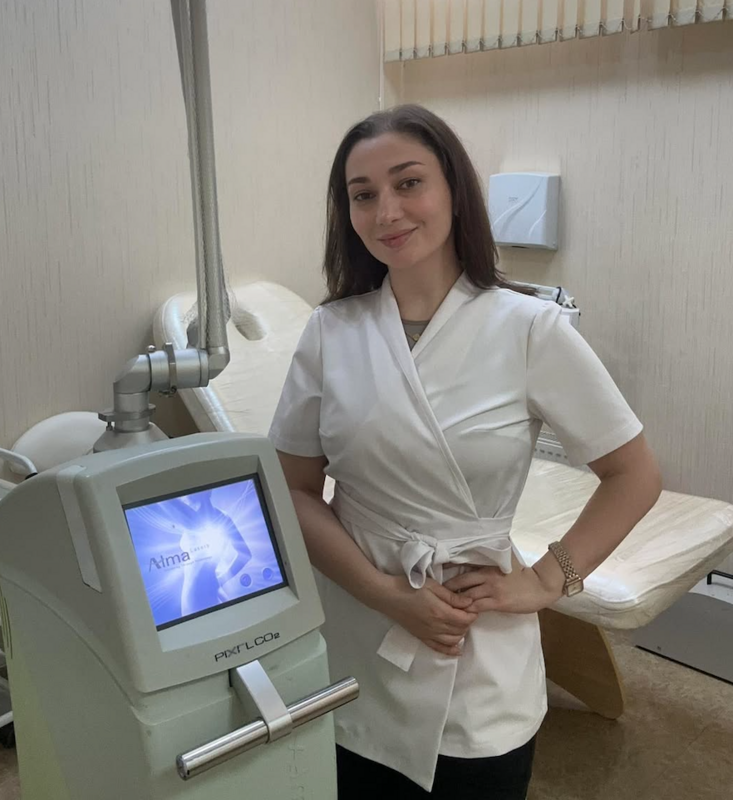
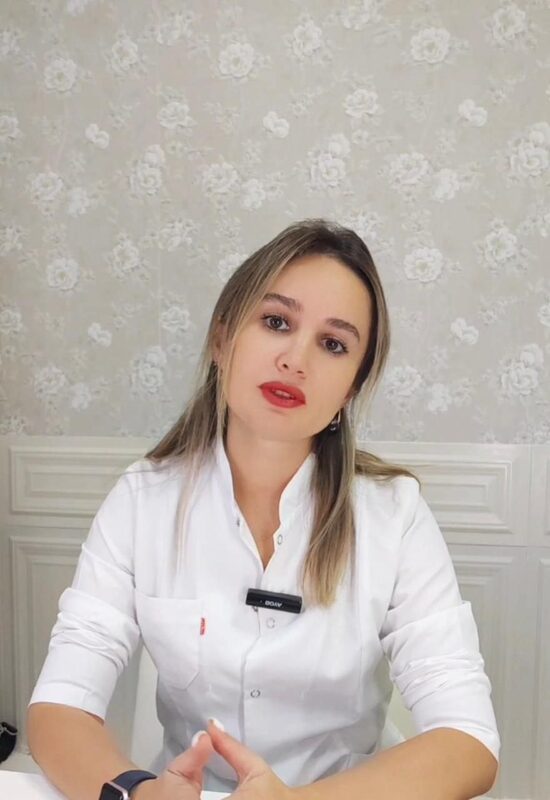
Simona Muradova
Cosmetologist (MD)
2019 · Yaroslavl Medical University · +1 cert.
Languages: Russian, Azerbaijani
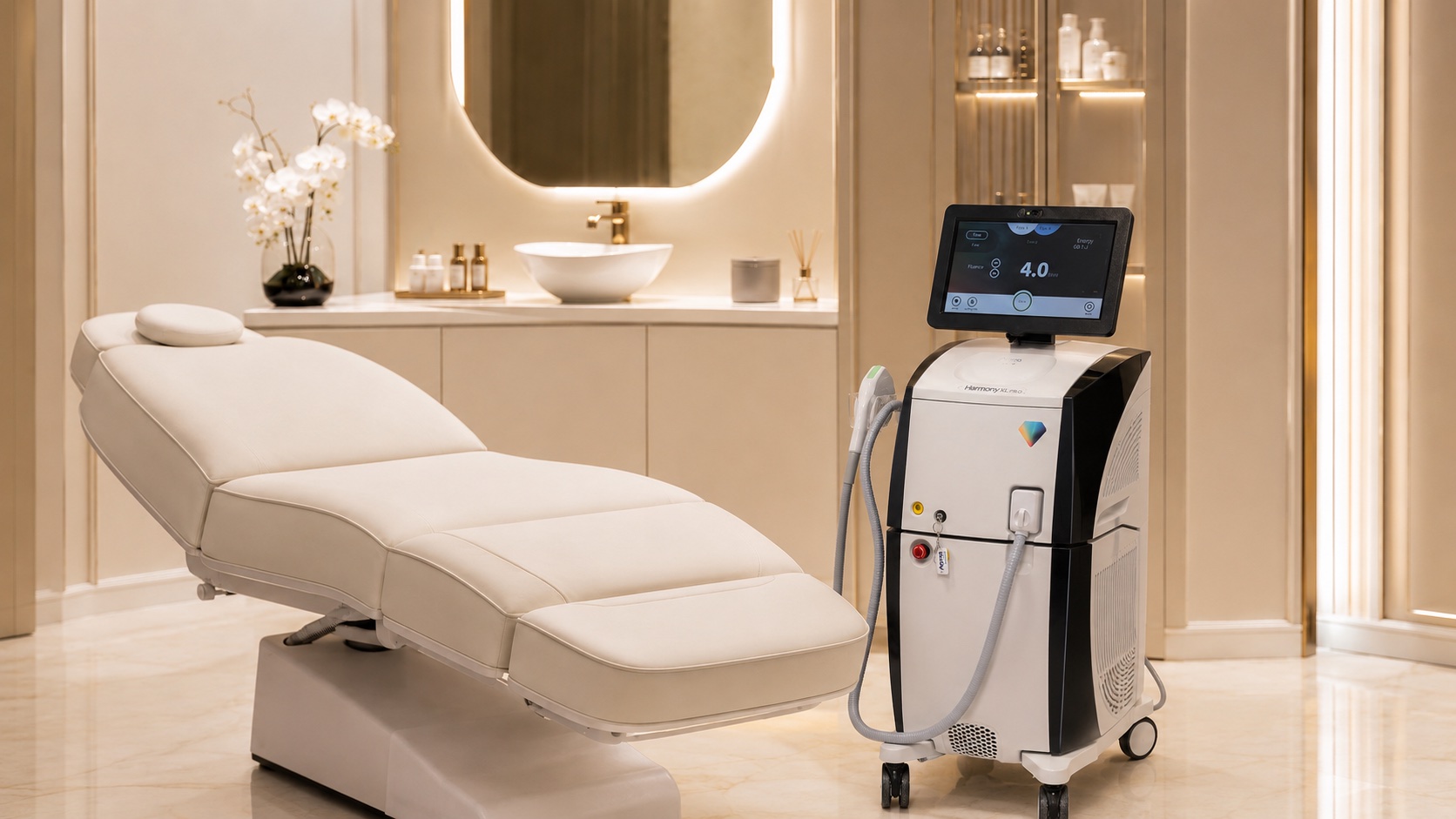
BBL is Sciton's broadband IPL platform with interchangeable filter cassettes (400–1400 nm). The Forever Young BBL protocol is the famous one — marketed as "long-term rejuvenation" based on Stanford research into changes in fibroblast gene expression. Harmony XL Pro (Alma Lasers) takes a different approach: AFT technology with two specialized handpieces — Dye-VL for vascular work and Dye-SR for pigmentation and photorejuvenation. Paramed doesn't run BBL as a separate platform — IPL scenarios live on Harmony XL Pro.
Leave your contact details, and our specialist will contact you for a consultation and booking.
By clicking 'Send', you consent to the processing of personal data in accordance with our privacy policy.
BBL (BroadBand Light) is Sciton's flagship IPL platform with multiple filter cassettes spanning 400–1400 nm. The Forever Young BBL protocol is particularly well-known — marketed as "long-term rejuvenation" backed by Stanford research showing changes in fibroblast gene expression after a series of treatments. In Baku, BBL is often searched as "BBL Baku", "Forever Young BBL price", "BBL photofacial". Harmony XL Pro from Alma Lasers addresses the same goals through a different philosophy: AFT (Advanced Fluorescence Technology) with two specialized handpieces — Dye-VL (~500–600 nm, vascular: rosacea, couperose, telangiectasia) and Dye-SR (~540–950 nm, pigmentation and photorejuvenation). In terms of clinical use, this is a direct analogue of the BBL scenario implemented on a different platform. Paramed doesn't have BBL — we work on Harmony XL Pro. Contraindications apply.
At consultation the specialist assesses Fitzpatrick phototype, skin condition (pigment, vascular, photo-aging, tone) and the goal — a one-off rejuvenation or a regular series like Forever Young. A typical course structure: 4–6 procedures on Dye-SR at 3–4 week intervals for pigmentation and general photorejuvenation; in parallel — Dye-VL for any vascular concerns. After the base course — maintenance sessions 1–2 times a year. In task and cadence this is comparable to how US clinics position Forever Young BBL.
BBL is Sciton's IPL platform with an interchangeable filter-cassette system: 515 nm for pigment, 560 nm for mixed dyschromia, 590 nm for couperose/rosacea, 695 nm for deeper targets, 800 nm for hair removal, and so on. The operator swaps cassettes within a session based on zone or concern. Forever Young BBL isn't a separate device — it's a protocol: a course of treatments aimed at "rejuvenation" and fibroblast stimulation, supported by clinical evidence. Harmony XL Pro works differently: AFT technology pre-converts unproductive wavelengths into a useful range via dye fluorescence. Dye-VL is a handpiece with a ~500–600 nm range (the hemoglobin sweet spot — vascular work). Dye-SR is ~540–950 nm (balanced for melanin and skin renewal — pigment and photorejuvenation). Effectively these are two specialized "cassettes", but with spectrum conversion instead of just filtration.
Not as a standalone Sciton BBL platform. At Paramed, IPL scenarios run on Alma Lasers Harmony XL Pro with AFT. We have two specialized handpieces: Dye-VL for vascular concerns (rosacea, couperose, telangiectasia) and Dye-SR for pigmentation and photorejuvenation. The course structure is comparable to Forever Young BBL: a series of treatments + maintenance.
These are different platforms within the same IPL class. BBL — Sciton's filter-cassette system, strong marketing positioning (Forever Young BBL). Harmony AFT — spectrum conversion instead of filtration, two specialized Alma Lasers handpieces. On comparable protocols, clinical results are similar. The key difference — at Paramed we specifically work on Harmony XL Pro.
Forever Young BBL is Sciton's clinical protocol: a course of treatments + regular maintenance aimed at "long-term rejuvenation", referencing research on changes in fibroblast gene expression. On Harmony AFT we can build a course with the same logic: 3–5 base treatments + maintenance every 3–6 months. The protocol doesn't have a branded slogan but the clinical idea is the same.
BBL is standard IPL with filter-cassette switching that cuts out unwanted wavelengths. AFT (Advanced Fluorescence Technology) goes further: unwanted short wavelengths aren't cut out but converted via dye fluorescence into a useful range. In practice this means a cleaner, more efficient spectrum and lower burn risk.
All IPL/AFT systems have restrictions on darker phototypes (IV–VI). At Paramed, phototype is assessed at consultation; for darker skin the protocol can shift toward Nd:YAG 1064 nm or ClearLift (also on Harmony XL Pro), both safe for dark phototypes.
A base course is 3–5 sessions at 3–4 week intervals. For a long-horizon rejuvenation scenario we plan maintenance sessions every 3–6 months.
Dye-PL photorejuvenation (AFT) — full face 200 AZN, half face 100 AZN, one-third face 80 AZN. ClearLift as an add-on — 300 AZN for the full face. The full price list is in the "Pricing" block above.
If you've been looking at BBL or Forever Young BBL, come in for a consultation. We'll assess your phototype, skin condition and the nature of your pigment or vascular concerns, and propose a specific AFT protocol on Harmony XL Pro with a series of treatments and maintenance.
Book a consultation →A base course is 3–5 sessions at 3–4 week intervals. For a long-horizon "rejuvenation" scenario in the spirit of Forever Young BBL, it makes sense to plan maintenance sessions every 3–6 months. SPF and basic skincare between sessions are essential. The effect builds toward the end of the course; results are individual.
Certified specialists at Paramed
Cosmetologist (MD)
2019 · Yaroslavl Medical University · +1 cert.
Languages: Russian, Azerbaijani
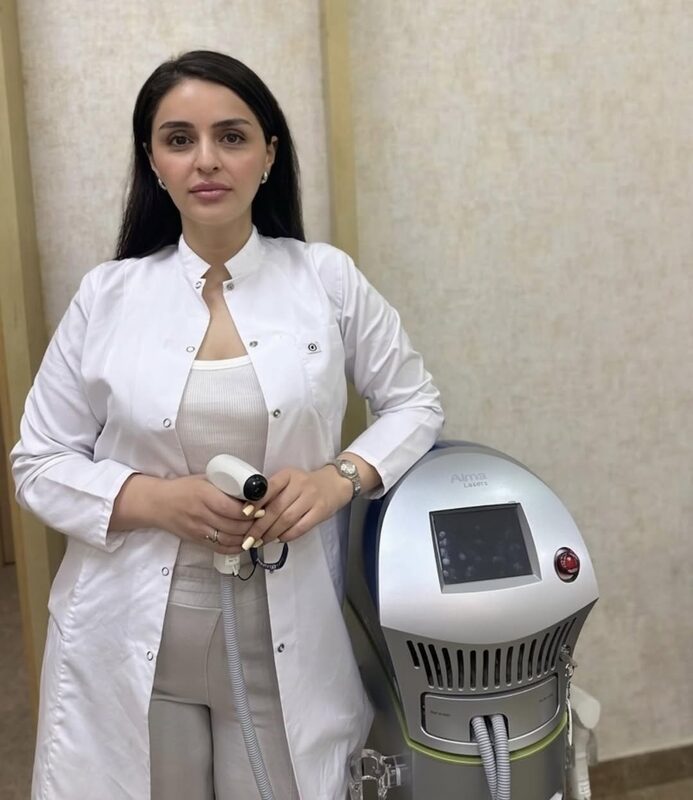
Dermatologist (MD)
2017 · Donetsk National Medical University · +1 cert.
Languages: Russian, Azerbaijani
Cosmetologist (MD)
15+ years' experience
2008 · Azerbaijan Medical University · +1 cert.
Languages: Russian, Azerbaijani