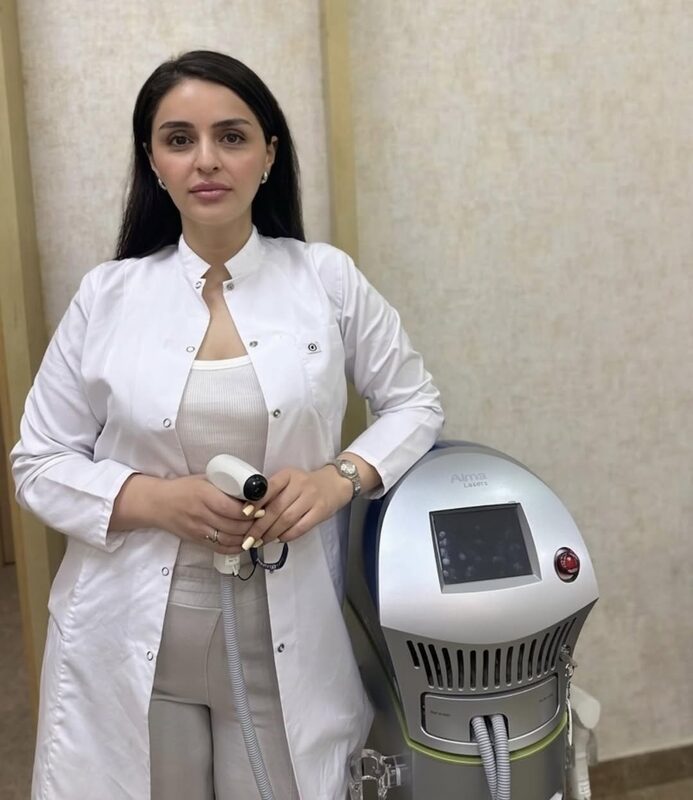
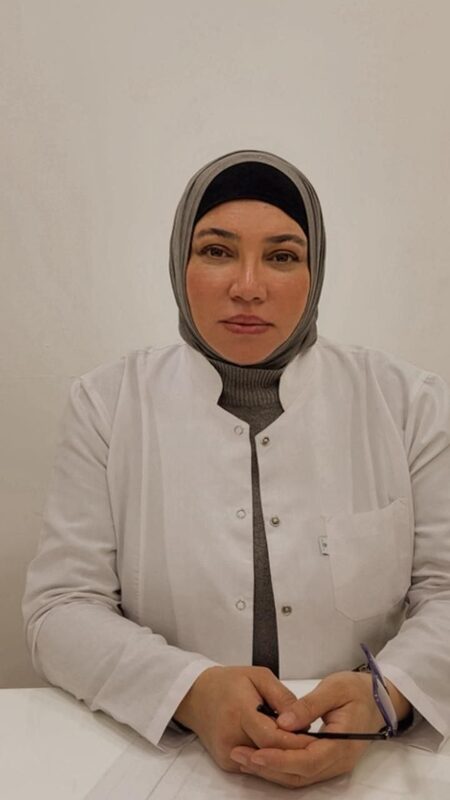
Aybeniz Mamedli
Dermatologist (MD)
2017 · Donetsk National Medical University · +1 cert.
Languages: Russian, Azerbaijani
Two different technologies with different strengths. Electrolysis treats one hair at a time via a needle — the only method that reliably removes light, gray and vellus hair. Laser is faster and suits most cases with dark hair. At Paramed we run Soprano lasers.
Leave your contact details, and our specialist will contact you for a consultation and booking.
By clicking 'Send', you consent to the processing of personal data in accordance with our privacy policy.
Electrolysis inserts a fine needle into each follicle and destroys it via electrical discharge or thermolysis. Works on one hair at a time. The only method officially FDA-approved as "permanent" hair removal. Laser uses selective photothermolysis of hair melanin. Faster (whole area per session) but requires pigment in the hair — so it works worse on light, gray and vellus hair. At Paramed we run Soprano lasers — sufficient for most tasks. Contraindications apply.
Paramed uses original Soprano ICE, Platinum and Titanium platforms by Alma Lasers (Israel), with original handpieces and safety-first protocols.
We run Soprano lasers (alexandrite 755 nm + diode 810 nm + Nd:YAG 1064 nm). Sufficient for most hair removal tasks. If your hair is predominantly gray, white or vellus — we'll be honest at consultation that laser won't deliver the expected result and recommend electrolysis (which we don't offer as a service).
Electrolysis acts on each hair follicle individually via a thin probe (needle). Galvanic, thermolysis or blend techniques are used. Energy doesn't depend on hair color — so it works on any hair: dark, light, gray, red, vellus. Downsides: one session takes a long time (a single area can take hours), more painful, and a course for large areas can extend over years. Laser works via selective photothermolysis: light is absorbed by hair melanin and destroys the follicle thermally. A whole area is treated per session. Downsides: less effective on light/gray hair (no pigment) — there electrolysis remains the only reliable choice.
Laser hair removal: 5–8 sessions at 4–6 week intervals — about 6–10 months. Electrolysis: a single large area (e.g. shins) can stretch over 1–3 years of weekly sessions. Exact timeline depends on hair density and electrolysis technique.
Depends on hair type. For dark and medium hair laser is more efficient by speed/result ratio. For gray, white, vellus hair electrolysis is the only reliable method.
No — at Paramed we only run laser hair removal (Soprano). If the consultation shows you need electrolysis, we'll say so honestly.
Electrolysis is typically more painful because each follicle is stimulated directly by a needle. Laser on Soprano with ICE contact cooling and In-Motion feels like a "warm tingle", noticeably more comfortable than electrolysis.
Yes. After a laser course there are often single fine/light/stubborn hairs — electrolysis handles those well. A typical scenario of combining both methods.
Electrolysis is the only method with FDA "permanent" status. When done correctly the follicle is destroyed irreversibly. But not every session kills every hair — repeat treatments are needed.
Yes, it doesn't depend on skin pigment. Laser requires avoiding active tan for 2 weeks before and after.
Laser — fixed price per area (e.g. full body 79 AZN/session). Electrolysis — hourly or per-minute pricing + long course. Over the course laser is usually more economical for large areas.
At consultation we'll assess hair type and color and honestly tell you whether laser suits your task. Test zone 3 AZN — the most transparent way to check.
Book a consultation →"I had a great experience at the clinic while deciding between electrolysis and laser hair removal. The staff was super helpful and answered all my questions. I'm really happy with my results and would definitely recommend them!"
Certified specialists at Paramed
Dermatologist (MD)
2017 · Donetsk National Medical University · +1 cert.
Languages: Russian, Azerbaijani
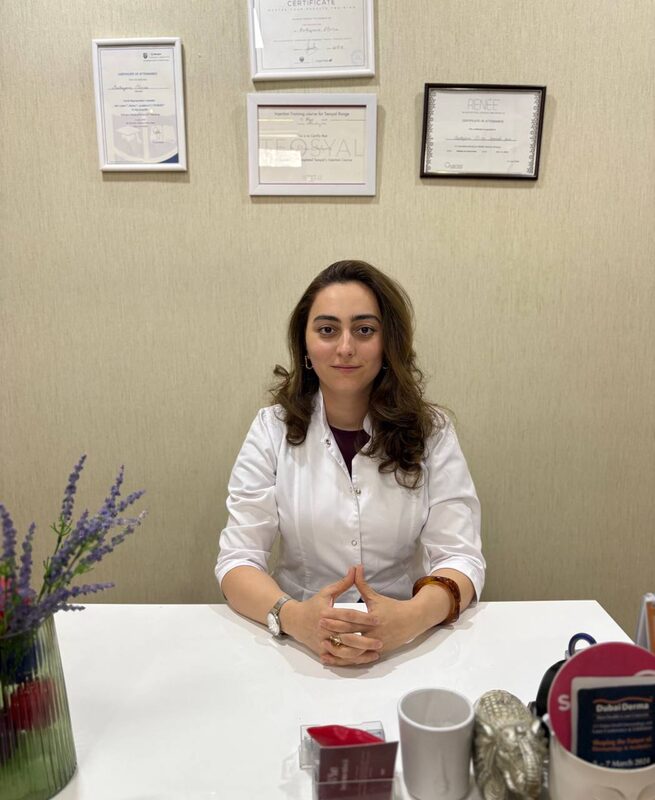
Cosmetologist (MD)
2009 · Tashkent Medical Academy · +2 cert.
Languages: Russian, Azerbaijani
Cosmetologist (MD)
25+ years' experience
1999 · Azerbaijan Medical University · +1 cert.
Languages: Russian, Azerbaijani