All treatments: Polynucleotides (PDRN)
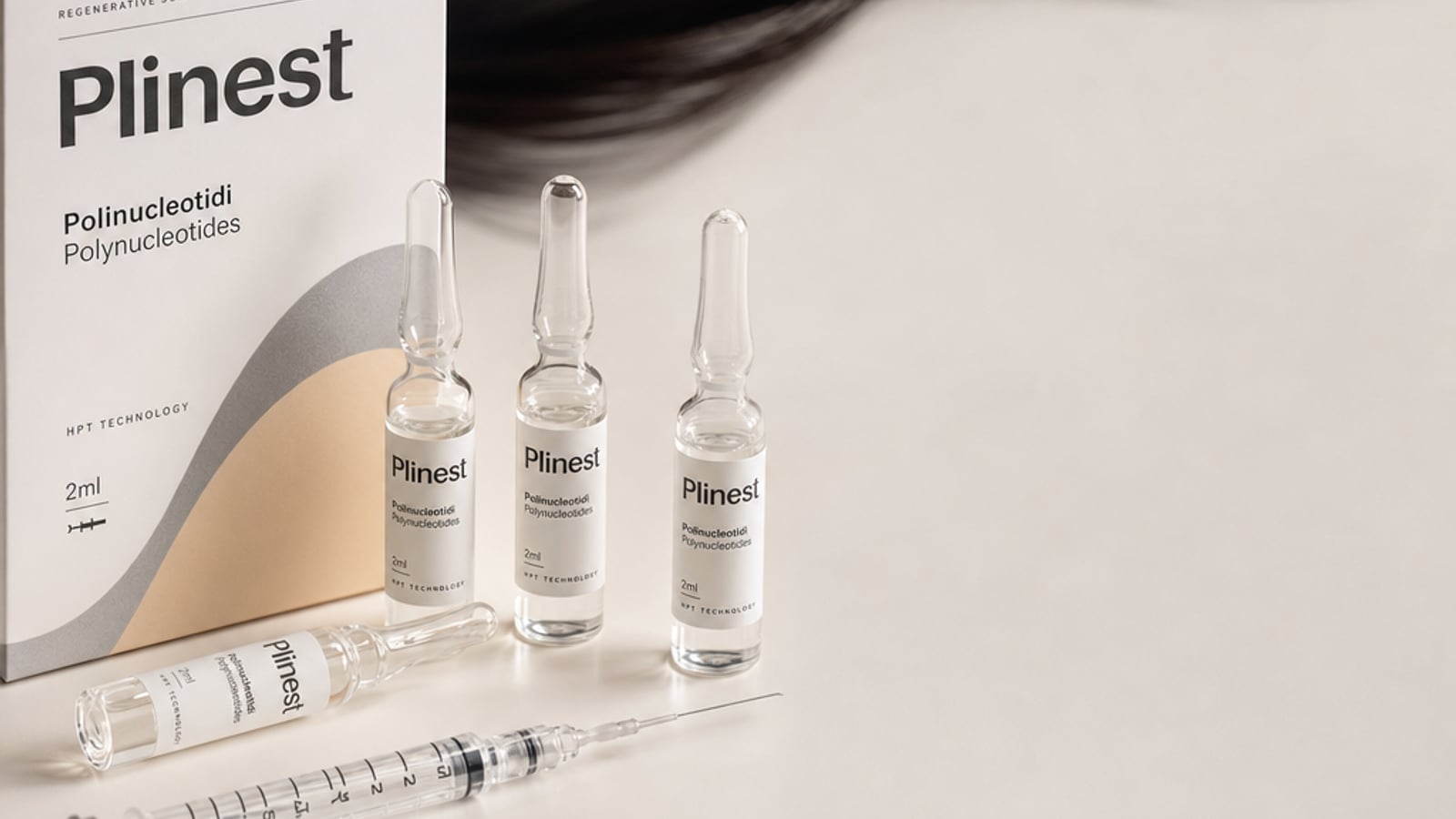
Polydeoxyribonucleotides (PDRN / PRDN) for hair — PhilArt SCALP, Plinest
PhilArt SCALP Plinest off-label PDRN for the scalp Course of 3–4 sessions

Polydeoxyribonucleotides (PDRN) for hair in Baku

DNA fragment injections into the scalp — for follicle regeneration, density, and quality of hair. The Korean PhilArt SCALP is the only polydeoxyribonucleotide protocol specifically designed for the scalp. Plinest is also used off-label in trichological protocols.

Book a Treatment

Leave your contact details, and our specialist will contact you for a consultation and booking.

  • Individual program selection
  • Price clarification by areas
  • Answers to all medical questions

By clicking 'Send', you consent to the processing of personal data in accordance with our privacy policy.

or
Message us on WhatsApp

Overview

Polydeoxyribonucleotides for hair are injections of purified DNA fragments from salmon/trout into the scalp. Unlike classic mesotherapy, PDRN does not function as a set of vitamins — it activates dermal fibroblasts in the scalp, improves microcirculation around the follicles, and reduces inflammation through A2A receptors. This is particularly valuable in cases of androgenetic alopecia, diffuse hair loss, and thinning hair — conditions where inflammation and impaired microcirculation play a key role. At Paramed clinic in Baku, we use the Korean PhilArt SCALP (Croma-Pharma) — the only PDRN specifically developed for the scalp, as well as the Italian Plinest (Mastelli) in off-label protocols. The program is tailored after trichoscopy and is often combined with mesotherapy, PRP, or exosomes to enhance the effect. A consultation is mandatory.

Benefits

  • Improvement of microcirculation around the follicles.
  • Stimulation of scalp fibroblasts — density and quality of hair.
  • Anti-inflammatory effect — reduces sensitivity and itching of the scalp.
  • Thickening of the hair shaft.
  • Compatible with mesotherapy, PRP, and exosomes.

How it works

During the consultation, the trichologist performs trichoscopy and assesses density, shedding phase, and the condition of the follicles. PhilArt SCALP or Plinest is injected with a fine needle into the dermal layer of the scalp at specific points — using the papule or micropapule technique. The session lasts 30–45 minutes, and anesthesia is usually not required (cooling is applied). The course consists of 3–4 procedures with an interval of 2–3 weeks. A maintenance session is recommended once every 3–4 months.

Technology

PhilArt SCALP is a Korean PDRN derived from trout DNA (Oncorhynchus mykiss), developed by Croma-Pharma specifically for the scalp. The molecular weight of the nucleotides is optimized for the dense dermis of the scalp. After injection, the chains are cleaved and bind to A2A receptors on fibroblasts and endothelial cells of blood vessels. This initiates collagen synthesis, angiogenesis (new capillaries around the follicles), and suppresses pro-inflammatory pathways TNF-α and IL-6 — the very ones involved in the pathogenesis of androgenetic alopecia and diffuse hair loss. Plinest is used in trichology off-label in a similar technique. Unlike PRP, PDRN is standardized in dosage. Unlike exosomes, it works not through the transfer of growth factors but through the activation of the scalp's own cells.

  • Source: Trout/salmon DNA, ultra-purification.
  • Products: PhilArt SCALP (Croma-Pharma) and Plinest (Mastelli, off-label).
  • Mechanism: A2A receptors of fibroblasts + angiogenesis.
  • Effect: microcirculation, anti-inflammation, hair thickening.
  • Often in conjunction with mesotherapy, PRP, or exosomes.

Preparation & aftercare

Before the procedure
  • For 24 hours, avoid alcohol and blood-thinning medications (upon agreement with the doctor).
  • Arrive with clean, dry scalp — without oils and masks.
  • Do not use aggressive shampoos and styling products on the day of the procedure.
  • Inform the doctor about any allergies to fish/seafood.
  • In case of active scalp inflammation, the procedure is postponed.
After the procedure
  • Do not wash your hair for 12 hours after the procedure.
  • Avoid saunas, swimming pools, and intense workouts for 48 hours.
  • Do not use styling products and hot hair dryers for 24 hours.
  • Avoid direct sunlight on the scalp for 2–3 days.
  • In the first day, pinpoint papules and slight redness may occur — this is normal.
  • Maintain the interval between sessions.

FAQ

? How does PDRN for hair differ from PRP?

PRP is your own plasma with growth factors, and the dosage depends on blood quality. PDRN is a standardized laboratory product with a fixed composition of nucleotides. PDRN is stronger in anti-inflammatory and vascular effects; PRP is stronger in platelet growth factor concentration. They are often combined in one course.

? How does PDRN differ from exosomes for hair?

Exosomes carry ready-made growth factors (VEGF, IGF-1, KGF) and activate Wnt/β-catenin signaling pathways — this is a 'boost' for dormant follicles. PDRN activates dermal fibroblasts and improves microcirculation — this is 'improving the soil' for the follicles. They are often used sequentially or together.

? Does PDRN help with androgenetic alopecia?

Yes, especially in combination with medication therapy (minoxidil, finasteride if indicated) and mesotherapy. PDRN does not replace primary treatment but enhances the density and quality of existing hair and reduces the inflammatory component.

? How many procedures are needed?

The initial course consists of 3–4 sessions with an interval of 2–3 weeks. Maintenance sessions are recommended once every 3–4 months.

? Can it be combined with PRP and mesotherapy?

Yes, this is a common practice. PDRN, PRP, mesotherapy, and exosomes work through different mechanisms and are often included in one program with varying orders and intervals. The plan is made by the trichologist.

? Is the procedure painful?

Discomfort is minimal — the scalp is less sensitive than the face. Cooling is applied, and a local anesthetic is used if necessary.

? Are there any contraindications?

Pregnancy and lactation, oncology, autoimmune diseases in the active phase, scalp infections, severe allergies to fish/seafood, blood clotting disorders. A complete list is provided during the consultation.

Booking

Ready to start?

Schedule a trichoscopy and consultation at Paramed clinic in Baku — we will assess the condition of your hair and select a program with polydeoxyribonucleotides: PhilArt SCALP, Plinest, in combination with mesotherapy, PRP, or exosomes.

Polynucleotides (PDRN / PRDN)

AZN Polynucleotides (PDRN / PRDN)
Service
Price
Polynucleotides (PDRN / PRDN) — Plinest (Mastelli, Italy)
Original Italian PDRN from trout DNA. Skin booster for density and skin quality.
380–450 AZN
Polynucleotides (PDRN / PRDN) — Newest (Mastelli)
Reinforced Plinest formula for mature skin and areas with marked atrophy.
420–480 AZN
Polynucleotides (PDRN / PRDN) — PhilArt EYE (under-eye)
Korea, Croma-Pharma. Special formula for thin under-eye skin — dark circles, wrinkles, thinning.
350–420 AZN
Polynucleotides (PDRN / PRDN) — PhilArt FACE
Standard face protocol: density, tone, post-acne, early signs of aging.
380–450 AZN
Polynucleotides (PDRN / PRDN) — Pluryal Silk
Switzerland, MD Skin Solutions. Accessible option for basic protocols and maintenance.
320–380 AZN
Polynucleotides (PDRN / PRDN) — Piennedi Medium (Medixa, Italy)
PDRN 20 mg/ml + hyaluronic acid. Skin density and firmness, medium wrinkles and scars.
350–420 AZN
Polynucleotides (PDRN / PRDN) — Piennedi Strong (Medixa, Italy)
PDRN 25 mg/ml + hyaluronic acid 2 mg/ml. Deep regeneration: face, neck, décolletage, hands, body.
420–480 AZN
Polynucleotides (PDRN / PRDN) — Rejuran Healer (PharmaResearch, Korea)
Pure polynucleotides from salmon DNA (DOT™). Flagship for all-round anti-aging, density and skin quality.
420–480 AZN
Polynucleotides (PDRN / PRDN) — Rejuran I (under-eye) (PharmaResearch, Korea)
Formula for the periorbital area: dark circles, thin skin, under-eye wrinkles.
350–420 AZN
Polynucleotides (PDRN / PRDN) — Rejuran S (PharmaResearch, Korea)
High viscosity, for post-acne scars and deep skin damage.
420–480 AZN
Polynucleotides (PDRN / PRDN) — Rejuran HB (PharmaResearch, Korea)
Polynucleotides + non-crosslinked hyaluronic acid. Hydration with less discomfort, good for a first course.
380–450 AZN
Polynucleotides (PDRN / PRDN) — TwAc 1.0 (Yuma Medical, UK)
PDRN + hyaluronic acid, entry concentration. Biorevitalisation and skin quality.
320–380 AZN
Polynucleotides (PDRN / PRDN) — TwAc 2.0 (Yuma Medical, UK)
PDRN + hyaluronic acid, reinforced formula. Density and tone across all skin layers.
350–420 AZN
Polynucleotides (PDRN / PRDN) — TwAc 3.0 (Yuma Medical, UK)
PDRN 10 mg/ml + hyaluronic acid 20 mg/ml. Deformational aging, hands, décolletage (30+).
380–450 AZN
Polynucleotides (PDRN / PRDN) — TwAc Eyes (under-eye) (Yuma Medical, UK)
PDRN + hyaluronic acid for the under-eye area: dark circles, puffiness, fine lines.
350–420 AZN
Polynucleotides (PDRN / PRDN) — Elare Red PN (U-Skin Lab, Korea)
Korea, U-Skin Lab. Salmon-DNA polynucleotide skin booster. Density, tone and quality of facial skin.
350–420 AZN
Polynucleotides (PDRN / PRDN) for hair — PhilArt SCALP
Korea, Croma-Pharma. Specialized scalp protocol: microcirculation, hair thickening.
300–380 AZN
Polynucleotides (PDRN / PRDN) for hair — Plinest (Mastelli)
Italian PDRN, off-label scalp protocol. Often paired with mesotherapy and PRP.
320–400 AZN
Polynucleotides (PDRN) — ADN Restart 2% (Mesopharm)
Russia, Mesopharm. Sodium deoxyribonucleotide 2% (salmon-milt DNA fragments under 450 kDa) with tripeptide-1 and a pH 7.0 buffer, 4 ml vial. Repair and anti-ageing work; delivered by injection.
$$$
Polynucleotides (PDRN) — NucleoSpire DNA-RNA 2% (Mesopharm)
Russia, Mesopharm. Polynucleotides at 20 mg/ml (2%) as salmon-milt DNA-RNA complexes plus non-stabilised hyaluronic acid 0.3%, in 1.3 ml and 4 ml vials. Intensive revitalisation, pigmentation work and recovery after aggressive procedures.
$$$
Polynucleotides (PDRN) — POLY-N Strong (Italy)
Italy. A polynucleotide gel at 25 mg/ml in a 2 ml syringe — one of the highest PDRN concentrations on the market. Mobilises fibroblasts to rebuild collagen and elastin; for marked loss of density and skin quality.
$$$

Our doctors

Certified specialists at Paramed

All doctors →
Rena Nasibova

Rena Nasibova

Cosmetologist (MD)

25+ years' experience

1999 · Azerbaijan Medical University · +1 cert.

Languages: Russian, Azerbaijani
Aybeniz Mamedli

Aybeniz Mamedli

Dermatologist (MD)

2017 · Donetsk National Medical University · +1 cert.

Languages: Russian, Azerbaijani

Simona Muradova

Simona Muradova

Cosmetologist (MD)

2019 · Yaroslavl Medical University · +1 cert.

Languages: Russian, Azerbaijani
Ask AI
Instant AI answer · 24/7